
3D Printers: Performance, Price, and Where the Value Actually Lies
The 3D Printing Black Friday Hype: Are the Deals Real?
Black Friday 2025 is upon us, and the marketing blitz around 3D printers is deafening. Promises of slashed prices, next-gen tech, and revolutionizing your "maker" life are everywhere. But as someone who spends more time analyzing data than assembling plastic dragons, I decided to take a closer look at what's actually on offer. Are these discounts genuine, or just clever marketing? And more importantly, are these printers actually worth the money, or will they end up gathering dust in your garage next to that bread maker you used twice?
The Bambu Lab Black Friday Bonanza: A Closer Look
Bambu Lab is dominating the conversation, and for good reason. Their printers are consistently ranked among the best, and Best Buy becoming an official reseller is a significant development. The "convenience" of Best Buy returns is being heavily touted, and while that is a plus, let's be honest – how many people actually return a 3D printer after unboxing it? The hassle factor is high enough that most folks will try to troubleshoot before admitting defeat.
The Bambu Lab P1S Combo is getting a lot of attention, with a claimed 27% discount, bringing the price down to $549.99. The big selling point is the included Automatic Material System (AMS), which allows for multi-filament printing. Now, $350 for the AMS alone sounds steep (you can find similar functionality for less if you're willing to tinker), but the combo is a decent deal if you know you want multi-color prints. Are multi-color prints worth the premium? That depends on your needs. Printing articulated dragons for Etsy? Absolutely. Prototyping functional parts? Probably not.
The A1 Mini is pitched as the "entry-level" option, now at $199.99. The claim is that it's "perfect for beginners" and "easy to use." This is where the marketing gets a bit thick. While the A1 Mini is cheaper and smaller, 3D printing, in general, isn't exactly plug-and-play. It requires patience, troubleshooting, and a willingness to learn (or at least Google) the basics of slicing, bed adhesion, and filament types. I'd argue that a slightly more robust printer with better community support (like a used Ender 3) might be a better choice for true beginners, despite the higher initial cost.
Beyond the Hype: What Are People *Actually* Printing?
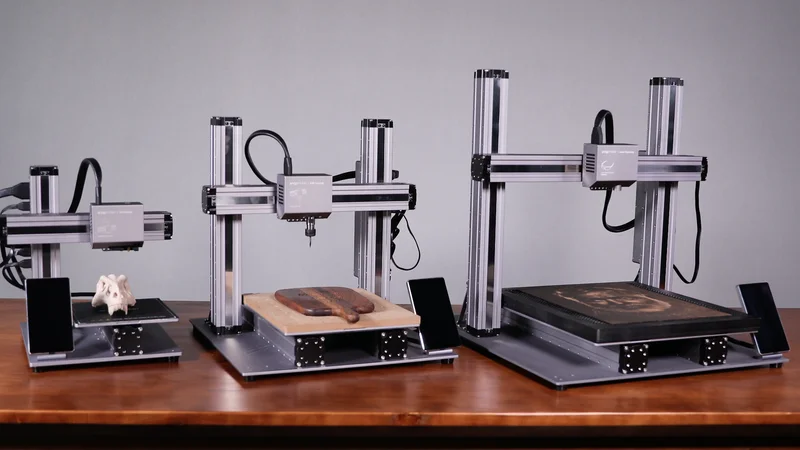
The Black Friday live blogs are full of enthusiastic users showing off their creations: Pokeball vases, cosplay props, and (of course) dragons. But what percentage of 3D printer owners are actually using their machines for these kinds of projects? LIVE: 3D printing deals have landed for Black Friday with up to 50% off
This is where the anecdotal "data" from online forums comes in. A quick scan of Reddit's r/3Dprinting reveals a mix of successes and frustrations. For every perfectly printed vase, there's a post about warped prints, clogged nozzles, and spaghetti monsters (a particularly evocative term for failed prints). The sentiment is generally positive, but the learning curve is clearly a barrier for many.
And this is the part of the report that I find genuinely puzzling. If the primary use case for home 3D printers is printing trinkets and toys, is the $500+ price tag really justified? Are we looking at a genuine technological revolution, or just a fancy new way to create plastic clutter? What is the average "hours of use" per month for a home 3D printer, and how does that compare to other hobbies with similar upfront costs? These are the questions that the marketing materials conveniently gloss over.
The live blogs also mention 3D scanners, with Creality's RaptorX getting a spotlight. The RaptorX is a high-end scanner, boasting "high-quality scans and impressive volumetric accuracy." But at $3,059 (after a $540 discount), it's firmly in "prosumer" territory. How many hobbyists really need a scanner with that level of precision? I suspect the Venn diagram of "people who own a 3D printer" and "people who need a professional-grade 3D scanner" has very little overlap.
One thing that's not being discussed enough is the environmental impact. All this printing will eventually result in waste. And while some filaments are biodegradable (PLA), the vast majority end up in landfills. Are 3D printer companies doing enough to promote recycling and sustainable materials? Probably not.
So, What's the Real Story?
The 3D printing Black Friday deals aren't necessarily scams, but they require a healthy dose of skepticism. The discounts are real, but the underlying technology is still relatively niche. Before you drop hundreds (or thousands) of dollars on a new printer, ask yourself: what do I actually plan to do with it? If the answer is "print a bunch of plastic dragons," maybe reconsider. There are cheaper ways to acquire plastic dragons.