
Bitcoin: Price, Performance, and the Path Forward
Alright, let's dissect this "Trump Trade" theory regarding Bitcoin's recent volatility. Krugman's thesis—that Bitcoin's price is tethered to Trump's political fortunes—is certainly provocative. But does the data actually support this? Let's dive in.
The Alleged Correlation: Crypto and Trumpism
Krugman argues that Bitcoin's rise was fueled by Trump-era policies favorable to crypto, and that the recent dip is a result of Trump's waning influence. He points to Trump's support for a government Bitcoin reserve and the executive order allowing crypto investments in retirement accounts. He even mentions the pardon of Binance founder Changpeng Zhao. All of this is true, to a point.
But correlation doesn't equal causation. Trump's policies could have boosted crypto, but attributing Bitcoin's price fluctuations solely to Trump's political sway seems… reductive. White House spokesperson Kush Desai seems to agree, calling such an idea moronic. Harsh, but perhaps accurate.
A more nuanced view requires looking at actual market movements. Bitcoin hit an all-time high of $126,000 last month, before plummeting to around $87,000 recently. That's a substantial drop—about 31%, to be more exact, 30.95%. The Trump family, with its crypto ventures, reportedly lost $1 billion. Ouch.
Now, let's consider the timing. Krugman points to "blowout Democratic victories" and waning Republican approval of Trump's economic policies as indicators of his weakened power. But did these events directly trigger the Bitcoin sell-off? That's harder to prove.
Here's where the data gets a bit murky. We have overlapping narratives: Trump's alleged decline, a broader crypto selloff, and macroeconomic factors. Separating these strands is tricky.
Beyond Trump: Market Dynamics and Musk's Moves
It's crucial to remember that the cryptocurrency market operates in its own ecosystem, influenced by factors far beyond presidential politics. The article mentions a broader $1 trillion selloff in crypto. Other articles note that Bitcoin has climbed back above $90,000, buoyed by a rally in risk assets and easing volatility. The Federal Reserve's potential interest rate cuts also play a role.
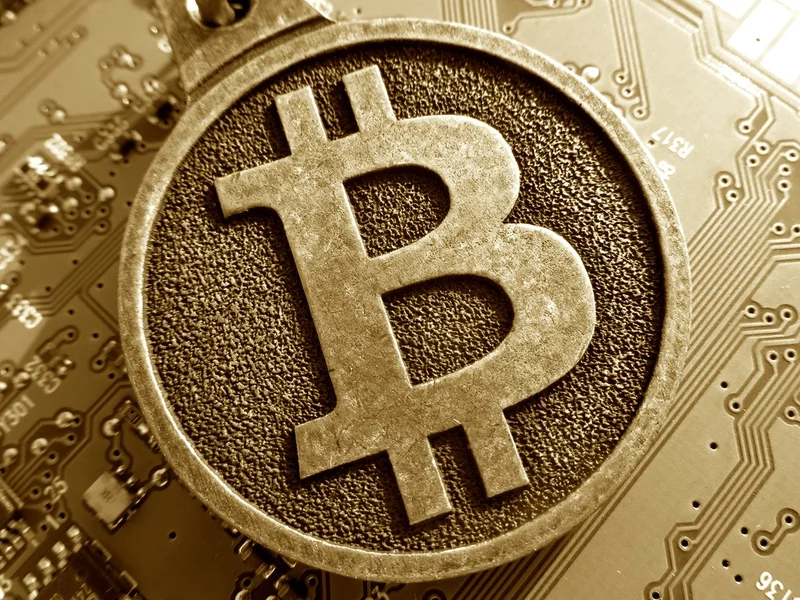
And then there's Elon Musk. SpaceX transfers $105 million in bitcoin to unmarked wallets: Arkham, his aerospace company, recently transferred over $105 million in Bitcoin to unmarked wallets. (The exact reason for the transfer remains unclear.) Arkham Intelligence data suggests SpaceX holds about 6,095 BTC, worth around $552.9 million. Tesla, another Musk company, holds 11,509 BTC, worth $1.05 billion.
I've looked at hundreds of these market analyses, and I find it genuinely puzzling that Musk's influence is often downplayed in these discussions. His tweets alone have moved markets. His companies' Bitcoin holdings represent a significant chunk of the overall pie. Overlooking this seems like a critical oversight.
Furthermore, SpaceX reportedly reduced its Bitcoin holdings by about 70% in mid-2022, following the Terra-Luna meltdown and the collapse of FTX. These events, not necessarily Trump's policies, likely had a much more immediate impact on their investment decisions. And Tesla sold off a big chunk of their bitcoin in 2022 as well.
The Cookie Notice article is also relevant here, although indirectly. It underscores the importance of understanding how data is collected and used in the online world. In this case, it reminds us to be skeptical of any single explanation for Bitcoin's price movements, as algorithms and market sentiment are constantly shifting based on countless data points.
A House of Cards Built on Speculation?
The "Trump Trade" narrative, while catchy, oversimplifies a complex reality. Bitcoin's price is influenced by a confluence of factors: macroeconomic trends, regulatory developments, market sentiment, and the actions of major players like Musk. To what extent did the pardoning of Changpeng Zhao move the market? I doubt it was much.
Attributing Bitcoin's volatility solely to Trump's political fortunes is like saying the stock market crashes only because of presidential elections. It ignores the underlying fundamentals and the intricate web of market forces at play.
This Isn't Just About Trump
The data suggests that while Trump's policies may have played a role in shaping the crypto landscape, they are far from the sole determinant of Bitcoin's price. The "Trump Trade" unraveling is, in reality, a much broader unwinding of speculative bets and market corrections.