
Rain: What it means for our future, and how we're adapting
Weathering the Storm: How Tech is Rewriting the Forecast for Thanksgiving and Beyond
Thanksgiving. A time for family, feasts, and…frenzied travel plans. But this year, the skies are throwing a curveball—or rather, a blizzard, a downpour, and maybe even a rogue thunderstorm or two. We're seeing headlines screaming about travel chaos, wind gusts strong enough to ground parade balloons, and lake-effect snow turning highways into skating rinks. Is it going to rain? Is it going to snow? Will I make it to Grandma's in time for the turkey? The questions are flying faster than Santa's sleigh on Christmas Eve.
Now, I know what you're thinking: "Great, Aris, another doom-and-gloom weather report." But hold on a second. Because while the immediate forecast might look a little dicey, this Thanksgiving's travel turmoil is actually highlighting something incredibly exciting: the dawn of hyper-localized, real-time weather prediction. This isn’t just about knowing if you need a rain jacket; it's about a future where weather disruptions become a thing of the past. Imagine, if you will, a world where your travel app proactively reroutes you before you even hit that patch of black ice, or where cities can optimize their power grids to handle peak demand during a sudden cold snap.
You see, all this Thanksgiving travel chaos, with it's risk of rain and snow, is not a sign of impending doom, but rather an opportunity to accelerate a tech revolution. What if we could use all this data to build a new generation of weather models?
From Broad Strokes to Brushstrokes: The Rise of Hyper-Local Forecasting
For decades, weather forecasting has been a game of broad strokes. We've relied on large-scale models that paint a general picture. But the atmosphere is a chaotic beast, a swirling dance of countless variables. Trying to predict its behavior with coarse-grained data is like trying to paint the Mona Lisa with a house-painting brush.
What's changing now? The explosion of sensor technology. Think about it: every smartphone, every car, every internet-connected device is a potential weather sensor. We're drowning in data: temperature readings, wind speeds, precipitation levels, all streaming in real-time from millions of points across the globe. The challenge isn't gathering the data; it's making sense of it, but the power is there.
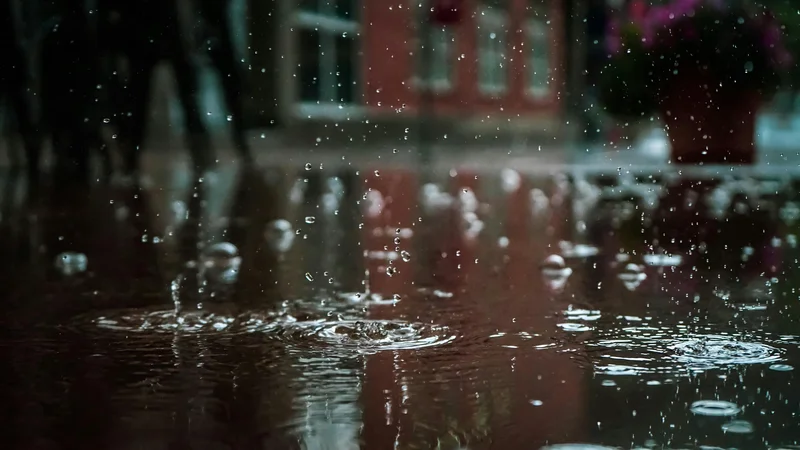
This is where machine learning comes in. We can feed these algorithms vast amounts of real-world data and train them to recognize patterns that would be invisible to human forecasters. The result? Hyper-local forecasts that can predict weather conditions down to the level of individual city blocks. Forget general "risk of rain"; imagine knowing the exact moment a downpour will hit your street.
And it's not just about prediction. It's about response. Imagine a future where smart traffic systems automatically adjust traffic light timing to compensate for sudden downpours, or where drones can be deployed to de-ice bridges before they become hazardous. The possibilities are endless.
It reminds me of the early days of the internet. Back then, people scoffed at the idea of buying books online. They said it was too complicated, too impersonal. Now, it's second nature. I believe hyper-local weather forecasting is on a similar trajectory. What does all this mean for us? What could it mean for you?
Of course, this raises some ethical questions. Who owns all this weather data? How do we ensure that it's used responsibly and not for some dystopian surveillance scheme? These are important questions we need to address as we move forward.
Conclusion Title: A Glimpse of Tomorrow
This isn't just about better Thanksgiving travel. This is about building a more resilient, more adaptable world. This is the kind of breakthrough that reminds me why I got into this field in the first place.
- turn_prevTijuana: The Road Ahead in Liga MX
- turn_nextFry's on Thanksgiving: Open or Closed?